


Case
Every successful collaboration is a testament to Yuxin Luchuang quality and strength. Explore how we provide reliable chemical solutions to customers in various industries worldwide, creating value together.
Application scenarios of silicon carbide replacing ferrosilicon
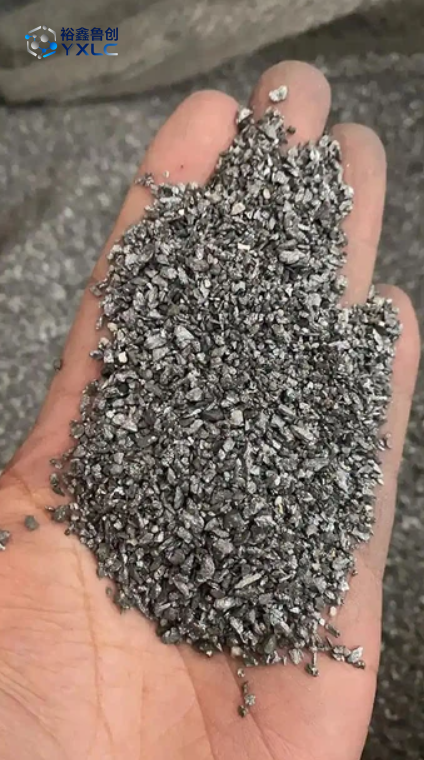
In the high-temperature metallurgical fields such as steel and casting, ferrosilicon has been used as a traditional deoxidizer and alloying agent for many years. However, with the increasing pressure on environmental protection and innovations in material technology, silicon carbide (SiC) is gradually becoming an ideal substitute for ferrosilicon due to its high efficiency and low emission characteristics.
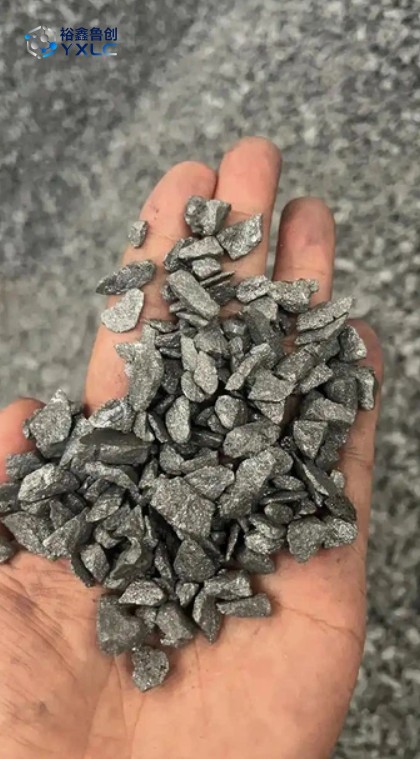
Comparison of properties between silicon carbide and ferrosilicon: why is it considered a successful substitution?
Silicon carbide (chemical formula SiC) is a covalent crystal composed of silicon and carbon. Compared to ferrosilicon (FeSi alloy containing 75%-90% silicon), its physicochemical properties are more in line with modern metallurgical requirements:
Deoxygenation efficiency:
Silicon carbide, with a silicon content of over 90%, collaborates with carbon to achieve a synergistic deoxidation effect. Its deoxidation efficiency in molten steel is 15%-20% higher than that of ferrosilicon, reducing the oxygen content in steel to below 0.002%.
environment protection
The production of ferrosilicon emits approximately 8 tons of carbon dioxide per ton, whereas through process optimization, the emission of silicon carbide can be reduced to below 5 tons per ton, making it more aligned with the "dual carbon" policy.
Cost advantage:
Although silicon carbide is more expensive than ferrosilicon, it can reduce the consumption of deoxidizing materials per unit by 30%, resulting in a comprehensive cost reduction of 5-8 yuan per ton of steel.
Impurity control:
The sulfur and phosphorus content in silicon carbide is ≤0.03%, which is significantly lower than that in ferrosilicon (generally ≤0.05%), reducing the presence of harmful elements in steel.
Core application scenarios of silicon carbide replacing ferrosilicon
1. Smelting of plain carbon steel and low alloy steel: efficient deoxidation and desulfurization
In steelmaking processes using converters and electric arc furnaces, silicon carbide can replace ferrosilicon alloy for both pre-deoxidation and final deoxidation.
Replacement rate:
It is usually calculated at a ratio of 1:1.2-1.5 (i.e., 1 ton of silicon carbide alloy can replace 1.2-1.5 tons of 75% ferrosilicon).
Application results:
A steel group has demonstrated that the use of SiC alloy can reduce the final oxygen content of molten steel from 0.0045% to 0.0028%, and decrease the subsurface porosity defect rate of continuous-casting billets by 40%.
Compatible steel materials:
Common carbon steels such as Q235 and 45# steel, as well as low alloy steels such as 20Cr and 40Cr.
2. Foundry industry: Improving the microstructure and fluidity of cast iron
In the production of gray cast iron and ductile cast iron, silicon carbide can replace ferrosilicon as an inoculant and alloying agent, offering multiple advantages:
Grain refinement:
The carbon in silicon carbide can promote graphite nucleation, resulting in an increase of 10% to 15% in the pearlite content of cast iron and a hardness increase of HB15 to 20.
Improve liquidity:
In the casting of automobile cylinder blocks, the use of silicon carbide can improve the fluidity of molten iron by 8%-12%, and increase the yield of finished castings from 88% to 95%.
Reduce shrinkage:
Reduce the shrinkage rate of cast iron to below 0.8% to minimize shrinkage cavities and porosity.
3. Ferroalloy production: Reducing energy consumption and impurities
In the production of silicon-manganese alloy and silicon-calcium alloy, silicon carbide can partially replace ferrosilicon as a supplementary silicon source.
Energy conservation:
Replacing ferrosilicon with 300kg of silicon carbide per ton of silicon-manganese alloy production can reduce electricity consumption by approximately 150kWh. Component optimization involves reducing the iron content in the alloy (from 2%-3% to 1%-1.5%) to enhance product purity.
4. Special steel smelting: precise composition control
When producing high-end steel grades such as stainless steel and heat-resistant steel, the low impurity characteristics of silicon carbide are crucial:
Stainless steel (such as 304 and 316):
Replacing ferrosilicon can avoid excessive iron doping and reduce subsequent iron removal costs.
Heat-resistant steel (e.g. Cr25Ni20):
Silicon carbide has stable deoxidation ability, reduces oxide inclusions in steel, and improves high-temperature oxidation resistance.
Replacing ferrosilicon with silicon carbide is not only an advancement in material technology but also an inevitable choice for the metallurgical industry to transition to low-carbon and efficient production. Its application scenarios are continuously expanding, from ordinary carbon steel to special castings, bringing multiple benefits to enterprises such as cost reduction, quality improvement, and emission reduction. With the maturity of technology and policy support, silicon carbide is expected to become the mainstream choice for metallurgical auxiliary materials in the next 5-10 years, driving the industry's green transformation. If you need to understand alternative solutions or procurement suggestions for specific industries, you can contact us for a customized analysis report.
Navigation
- The economic operation of the petrochemical industry in the first half of the year showed six major characteristics
- In July, the added value of chemical raw materials and chemical products manufacturing increased by 7.2% year-on-year
- Chinese scientists have increased the energy density and battery life of lithium batteries by 2-3 times.
- Connecting with over 4,000 factories, a company launches a one-stop procurement service for chemical products.
- Covering Seven Therapeutic Areas! A Company's Pharmaceutical Intermediates Product Range Exceeds 330 Categories
- Based on "sincerity and integrity," a company has established a comprehensive R&D, production, and sales service system.
Send Us A Message